Friday, September 23, 2011

Prawning at night

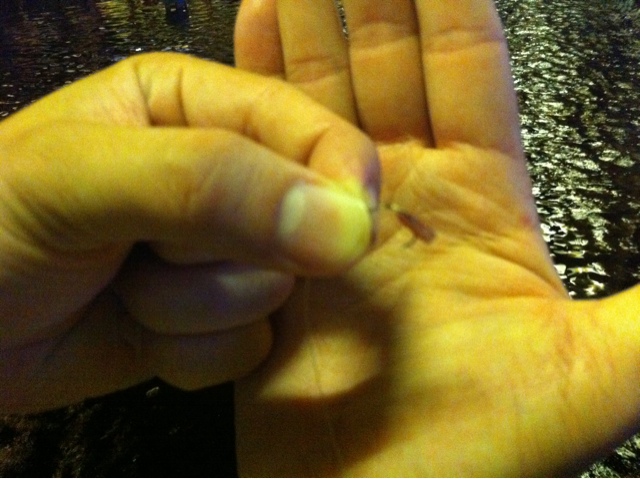
Such a fun night yesterday my first time at prawning @punggol. Just follow the road of punggol east beside riveria lrt.

We managed to catch a prawn after some time. Boy does it take patience. So first you rent a rod and you measure the height of the water so the bait does not touch the ground and ut is dangling for the prawn to eat the bait. Then you look at the following ball in the water connected to your rod; once it goes under the water it means the prawn has taken the bait then you put your rod parallel to the water then pull.

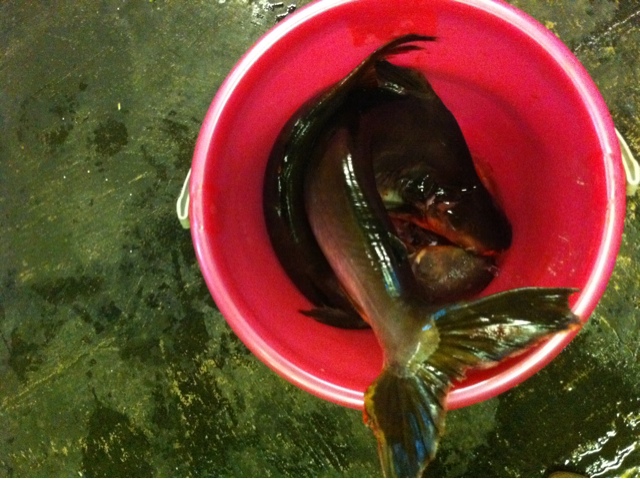
Next to the prawning was the fishing so interesting! Seems very fun though. Once you catch the fish you need to pat the fish let it relax then jerk it outbid the water. Because if it struggles it might break your line.

Very fun I am going back there soon! Hahahaha

Wednesday, September 14, 2011

Giving the support ; Holding their hands

Much apologies dear readers for the lack of update, been busy exploring ideas on implementing a long term social plan for 2 groups in consideration ( Either the ex-offenders Or the adults with mild disability) in my company and learning from social entrepreneurs how it has been done.

I have a heart for both of these groups because of my personal volunteering with them and sees how we can help them by embracing them back into our society, and treat them like one of us. And one of the way I am coming up with is to provide training and jobs opportunities for them.


For Ex-offenders, I have talked to a number of people and to many, it is still an issue that they struggle with because they have the belief that its a nature/habit that the ex-offenders have ingrained within them that is difficult to change. I do not deny it is untrue - but it is not for all. There are offenders in the prison through the time in incarceration have realized that it is not only them who are hurting, but also that of their family members and they are determined to make a change. And these are the people I believe we should lend a helping hand. Make them feel confident in saying "I am an ex-offender but I am a changed person" instead of hiding their past.

I remembered crying when they sang the song. For those who lack their family support (which is usually the case that they re-offend), can we be that missing support?


牽我的手 (國語翻譯)

牽我的手 我的主啊
請祢別離開我
這條路我還要走
我需要祢來作伴

牽我的手 我的主啊
請祢別離開我
有時我會怕 有時不知怎樣走
有時好像聽不到祢的聲

牽我的手 請祢跟我作伴
給我的腳步又穩又定
走到祢的門前
聽到祢的聲
跟我講 進來我的子

———————————

牽我的手(台語原版)

牽我的手 我的主阿
請祢麥離開我

這條路我擱要行
我需要你來作伴

牽我的手 我的主阿
請祢麥離開我
有時我會驚 有時不知安怎行
有時干那聽不著你的聲

牽我的手 請祢甲我作伴
互我腳步又穩又定
行到祢的門前

聽到祢的聲
甲我講 入來我的子


Same as I always tell my friend. For lower income family whose children are already in secondary school, I think the mother should come out in the working world and help add on to the family income and pull the family out of poverty. Help and encouragement must be provided for them to give them the courage to step back into the working world. Its not only for them but for the empowerment of their family - specially for their children. I have witness the difference and I hope these stay-home mothers ( whose children are independent enough then) to help lighten the load and stress of the poor fathers. Even well-to-do families have 2 persons working now - does it mean their children needs lesser attention that those who are in the lower income? I might receive some backlash for this - but do know I come from a sincere heart - and know that it makes a difference.

And for children/adults with mild disability either as a physical disability, mild autism or..., is there an avenue for them to become more independent so their parents can feel more assured for their children instead of constantly worrying (should anything happen to them what will happen to their 'child'). I have friends who are parents of children with autism and they know no where to look for support ; either than work hard and hope that they can set up a fund to ensure their child have sufficient support should anything happen to them.
I am thankful and delighted when I see schools set up for them to teach them skills and things of the mainstream school - building their foundation. And I am elated when I hear parents or companies setting up food places to let them train their learned skills practically.
E.G.
Dignity Kitchen - which operates within the Balestier Market Food Court – is just like a food court, occupying a four-stall space and a classroom for lessons ( Which unfortunately closed last August 2010) and Happy Arts Vegetarian Cafe who employ metta adults giving them practical training during their school time and many others.

Will be meeting up with the various organizations the following week. Let's see how it goes. Do leave me a message if you have ideas!

Thursday, September 1, 2011

How to become a Social Entrepreneur :)


Articles from INC.

Scott Harrison was 28 years old, sitting on a beach in Uruguay with a model girlfriend, a Rolex Watch and a BMW waiting nearby—a life the nightclub promoter in New York City had been chasing after for nearly 10 years—when he realized (in his own words) "what a selfish scumbag" he was. His entire adult life had been geared towards serving himself and the club patrons, and when he had done nothing to help others, it made him step back.

Seven years removed from that day on the beach, Harrison is still in New York , heading up Charity: Water a non-profit organization that has delivered clean drinking water to over 1 million underserved people in 17 different countries, and aspires to help more than 100 million in the next ten years. How serious of a problem is he tackling? In short, nearly a billion people on the planet don't have access to clean, safe drinking water (that's one in eight people). One of the most successful social entrepreneurs of our time, Harrison's visionary non-profit grew over 100% in the first quarter of 2011 (as compared to the same period in 2010), the economy be damned.

Brenda Palms Barber, Chicago's Queen of Second Chances, is dedicated to finding jobs for former prison inmates. But when the nonprofit she runs couldn't overcome employers' resistance to bringing on ex-offenders, she spun out a business so she could hire them herself.

North Lawndale Employment Network, or NLEN, is located in a west chicago neighborhood in which 57 percent of the population has done prison time. "People here don't talk about incarceration in a negative way," says Palms Barber, who is NLEN's executive director. "They don't say, 'My son is coming out of prison.' They just say, 'My son is coming back. And he needs a job.' "

But when Palms Barber, a career foundation worker, took charge of NLEN in 2000, persuading employers to take a chance on clients with a criminal record was a tall order. The only answer, she decided, was to launch her own business to hire and train former inmates. Hence, Sweet Beginnings, a wholly owned subsidiary of NLEN that produces honey and honey-based skin care products and is staffed almost entirely by ex-offenders. "I had to demonstrate that ex-offenders can be good workers," Palms Barber says. "They can also be good for your bottom line."

Palms Barber toyed with several business ideas (a temp agency, a landscaping company, a delivery service) before a board member introduced her to a friend who raised bees. "He told me beekeeping was a profession passed on by word of mouth," said Palms Barber. "I liked that, because people learn well by storytelling, especially when they have academic challenges." Sweet Beginnings launched in 2007 with $140,000 from the Illinois Department of Corrections. At first, the company sold honey at farmers' markets. But the 13 percent margin on honey was not enough to fulfill Palms Barber's second goal: to create a sustainable source of income for NLEN and free it from the unpredictable ebb and flow of grant funding. Honey-infused skin products were a more lucrative proposition.


-----------------------------------------------------------

How to Become a Social Entrepreneur: Know Your Issue

What made Harrison's mission different? While in Liberia taking photos, he recognized the one item that was causing sickness and even death for most of his subjects was something many of us take for granted, clean water. He saw it (people walking miles to get clean water), photographed it (including emails to club-promoting friends) and found his calling. When he returned to the U.S.A he knew what issue to tackle, and he has never looked back.

Regardless the issue, you need to be 100% in on it. "The biggest mistake I see most people make is that they're half-in, half-out," notes Harrison. It's great that you want to help others, but you need to know what you're doing. And it's not easy. So if you're not sure what to do, look into joining another existing non-profit until you find your passion.

As Sweet Beginnings it is an unexpected little company, tucked away in a neighborhood of vacant homes and boarded-up stores. In a pocket-size lot behind a chainlink fence, men and women wearing what look like modified hazmat suits tend an apiary humming with small, furry life. In addition to raising bees, former inmates perform jobs that include manufacturing, website management, sales, and customer service. Most work 90 days, although a few stay on as team leaders for a year or so. The perpetual turnover is not ideal from a management perspective, but it's the only way to provide experience and resumé entries for large numbers of people. Employees are paid minimum wage; payroll costs are subsidized by the city and the state.

With Sweet Beginnings on their resumés, roughly 85 percent of employees find an unsubsidized outside job, compared with around 50 percent of NLEN clients who have not worked at the honey business. More important to Palms Barber: Fewer than 4 percent of Sweet Beginnings's workers have landed back in prison, compared with a national average of 65 percent.

How to Become a Social Entrepreneur: Build the Brand

To get the message out, we had to create an epic brand that people could trust to do that."

For charity: water, it was about re-creating charity. He built a 100% model (finding separate donors to fund staff and operations) and wanted to show donors all the work they helped to fund. The first employee Harrison hired was in operations, and the second a designer who helped to build the brand from scratch, differentiating it from other charity websites. And for the name, he simply thought of what he was doing as charity and added whatever the first thought he had was, which unsurprisingly was water.


How to Become a Social Entrepreneur: Think of It As a Business

"The modern non-profit must adopt many of the same strategies, policies and best practices employed by successful enterprises in the for-profit world, but not at the cost of its soul," writes Scofield.

While it is important to function as a non-profit in legal terms, the most successful charities are well-run organizations, no different than for-profit companies but with a different business objective. Literally every element of your brand should be business-driven. For charity: water, their sleek New York office consists of donated goods but rivals any top creative agency, they employ sophisticated CRM software to learn more about their donors (like a salesperson would a client), and plenty more.

"I think of charity: water as a for-profit tech startup that has no profits," says Harrison. "We give away 100% of our profits. So the better year we have, the more people around the world have access to clean water. Our shareholders are people in 17 countries around the world waiting for a rig to drive into a village to provide clean water to a few hundred people living there. We use the word business so much more than non-profit, even though that's what we are."

For sweet beginners, today the company brings in about $100,000 a year in sales; it projects sales of $2 million in five years. The business sells its Beeline-branded products (soon to be renamed Beelove, for trademark reasons) at 13 Whole Foods stores—at which employees practice interacting with the public by handing out samples—in boutiques around the country, and at farmers' markets. Recently, Palms Barber negotiated a deal with the Chicago Peninsular Hotel part of the luxury chain, which will offer Sweet Beginnings's honey in its restaurant and tell the company's story on its website. And the Chicago Department of Aviation has agreed to house a Sweet Beginnings apiary and sell Beelove products at O'Hare International Airport.

Since 2007, about 200 former inmates—up to 15 a quarter—have worked at Sweet Beginnings, and, as the company grows, it will accommodate more.

James White worked on Sweet Beginnings's production floor in 2009. He was later hired by Christy Webber Landscaping and recently launched his own landscaping business. "All I had on my resumé was stuff I did when I was incarcerated, like librarian's assistant," says White. "Sweet Beginnings is a name people know. They taught me to be professional and dedicated to my job. If it wasn't for that, I wouldn't be where I am."

Cheers :)


Friday, August 26, 2011

Project Inspire 2011 :) Social Entrepreneurship :)

Dearies! Much apologies for MIA-ing for quite some time from the blogosphere.
Was away on a trip to Yunnan- till date have only managed to blog about Dali gonna blog about the rest on the weekend :) here's the link

Upon return, I was invited to Project Inspire by UN Women UNIFEM which I am a member of, to view the top ten finalists who were shortlisted from hundreds of submissions where their entries were uploaded onto the Project Inspire website for public voting.
That day was the ‘live’ pitch.
It was a forum full of passionate social entrepreneurs - who aims to make a difference in many underdeveloped countries.
Date: Wednesday 24th August 2011 845am to 215pm at INSEAD Auditorium.

What then is Project Inspire about? It presents 18-35 year olds with a 5-minute platform via a video or a written pitch to articulate their inspired idea to the world and win a US$25,000 grant to make their idea a reality. The grant will be used to bring to life the winning idea and empower disadvantaged women or children in Asia/Pacific, Middle East and Africa through education, skills training, financial inclusion or social entrepreneurship.

It is a joint initiative by UN Women Singapore and MasterCard, Project Inspire was launched in March to commemorate the 100th year of International Women’s Day and to celebrate MasterCard’s 25th year in the region.The 10 finalists – from Australia (2), Ghana, Indonesia, Thailand, Singapore (2), India and the Philippines (2) – were selected out of 450 youth teams worldwide who submitted their life-changing ideas to empower women and girls across Asia/Pacific, Middle East and Africa.

AND THE WINNERS ARE!

‘The Hapinoy Program’ from the Philippines.

The Singapore National Committee for UN Women (UN Women Singapore) and MasterCard Worldwide awarded the USD25,000 Women’s Empowerment grant to them

Their winning project aims to support 1,000 women ‘sari-sari’ (or neighborhood convenience store) owners in Luzon in the southern Philippines through micro-finance. Hapinoy trains the women micro-entrepreneurs in personal and business development, management systems, and better priced goods, and introduces additional revenue channels.


The Hapinoy Program

Description

Team: Paolo Benigno Aquino IV, Michelle Pabalan, Mark Ruiz (Philippines)
Who the project helps: Women micro-entrepreneurs in Southern Luzon, Philippines

Get to know the team behind The Hapinoy Program

What or who is your greatest source of inspiration?

Our greatest sources of inspiration are our nanays (mothers). They are the most important collaborators of Hapinoy as they co-create the components of the program with us. We’ve witnessed the transformation of their mindsets, self-image and belief systems. We take inspiration from them as they transform into empowered entrepreneurs, mothers and wives. And most of all, our nanays have found a larger purpose than just to grow one’s business - it is also to help their local communities. Hapinoy is a distribution platform made up of the poor, in order to help the poor.

Why do you think women’s empowerment is important?

Here in the Philippines, we have a saying: "Ang ina ang ilaw ng tahanan," which translated means “The mother is the light of the household.�? Our belief in women’s empowerment is also embedded in our culture. There also have been studies that show women are good entrepreneurs because the bulk of their revenue goes to their families and towards good investments. We are confident that the empowerment of women will create sustainable communities.

How will you change the world for women and girls?

Hapinoy believes that given the right access to goods and opportunities, the poor will be able to lift themselves out of poverty. We work towards the economic and social growth of the communities we engage. We believe we are changing the world for women as we help develop them into successful micro entrepreneurs and leaders of their communities.

What can other people do to help disadvantaged women and girls?

Collaboration is key for the Hapinoy program as it is made to be a platform for like-minded individuals, institutions and corporations. They not only provide another perspective to what we’re trying to achieve, but they’re stakeholders on board with the program.

Women have the power to lift themselves out of poverty. All they need are opportunities to take. With the co-creation of programs between different groups and individuals, we believe we all can create big opportunities for women to change their lives for good.

What is your favorite inspirational quote?

"Because the people who are crazy enough to think they can change the world, are the ones who do."
-Apple Inc.


The judges also awarded a special grant of US$10,000 to Mark Cox, who represented his team from Thailand for the Best Financial Literacy/Livelihood proposal.

Their project, ‘UPLift Initiative’will empower Burmese women migrants living in landfills at the border of Thailand and Myanmar by building a women’s resource centre that provides financial literacy training and skills for income generation activities.

Team: Jennifer Jones, Nobel, Mark Cox (Thailand)
Who the project helps: Oppressed Burmese women migrants and their families in Thailand

What or who is your greatest source of inspiration?

All of us have been profoundly affected and inspired by our mothers. Nobel says, "My greatest source of inspiration is my mother. Even though she is uneducated, poor and lives hundreds of miles from me, she has spent her life struggling for our education and survival. Her mind is noble and her encouragements have kept me traveling towards my goals. She is the strongest woman I have ever seen in my life and she has always been my role model. Because of her encouragement and guidance, I am an educated, independent woman who helps others in our community."

Why do you think women’s empowerment is important

All humans on this planet have equal rights to live their lives with dignity. There are far too many examples all over the world which indicate that this is currently not the case. Women face domestic abuse and rape in every country of the world. A disproportionate number of people living in poverty are women. Women’s empowerment helps women take up the struggle to attain those basic, equal rights, and to live in a world with the dignity and respect they deserve. Women’s empowerment is important for everyone, male or female, in helping to create a world that is fair and just for all.

How will you change the world for women and girls?

Currently, in the Mae Sot area, we are working with women from Burma so that they have the capacity to improve their own livelihoods under difficult circumstances. Women who increase their income will be able to afford an education for their children, which will improve their chances of a better life in the future. Our livelihood projects not only educate and improve the lives of women participants, but also enable girls, who sometimes cannot attend school with their brothers due to financial constraints, to stop working alongside their mothers and to start attending school.

What can other people do to help disadvantaged women and girls?

Every single person has the ability to make an impact on the lives of women and girls no matter where they live. Disadvantaged women and girls often take daring risks and make small gains in difficult conditions. Sometimes just recognizing their success can make a difference. Volunteering to mentor a young girl as a Big Sister can change a life. Teaching a girl to read can have a lifelong impact. Encouraging girls in their work and study and recognizing women’s work as work is something that everyone can do everywhere. Anyone can speak out against domestic violence. Everyone can make a difference.

What is your favorite inspirational quote?

Mark: Mother Theresa said, "We can do no great things; only small things with great love." To me, this means that sharing skills and knowledge (small things), which most people see as less important than money (a very big thing indeed), is the best way for me to spend my time.

Nobel: My mother's quote gives me the most strength and energy and drives me to work harder and improve my life. She says, "Women are stronger than men."

Jennifer: Margaret Mead said, "Never doubt that a small group of thoughtful, committed citizens can change the world. Indeed, it is the only thing that ever has."

In a surprise development at the Grand Finals, MasterCard also put forward a US$10,000 special prize for the Most Creative Community Outreach proposal, which the judges awarded to Madhura Dutta for ‘Painting the Road to Empowerment’ from India.

Her team’s program benefits abused and discriminated women from Pingla, East India, who have a unique culture of earning a living by singing and painting. Her winning project aims to replicate the successful Pingla model in the nearby village of Chandipur, bringing this artistic talent to the production of diversified products including decorative scrolls and other artworks.


Painting the Road to Empowerment

Team: Madhura Dutta, Moyna Chitrakar, Imran Chitrakar (India)
Who the project helps: Women and girls in Chandipur Village, IndiaWhat or who is your greatest source of inspiration?

There is a huge challenge and potential of bringing about social empowerment in India through folk tradition targeting an equitable society and better livelihood especially for women. The success of using creative talent embedded in Patachitra art of indigenous women communities to develop alternative avenues for their socio-economic development is a great source of inspiration for us. The women artists of Pingla have been greatly inspired by their own paintings and the opportunities they get to display their art to the wider world. They feel great to engage in Patachitra painting professionally alongside their household work.

Why do you think women’s empowerment is important?

India's progress has been slow in attaining the MDG [Millennium Development Goals] of achieving gender equality and women empowerment by 2015. Participation of women in employment and decision making remains far less than that of men. There is a severe lack of priority of women development in terms of health, education, livelihood and equitable share within the family due to a strong culture of patriarchal society. Though the socio cultural stereotypes pose a serious challenge to the cause, Patachitra women of Pingla have their own income sources leading to recognition and an identity based on their rich cultural capital.

How will you change the world for women and girls?

It is essential that the women of Chandipur village who are painting Patachitra art believe that their inherent traditional skills can give them a life of respect, dignity and financial independence. Today women artists at Pingla have acquired an identity of their own, attending exhibitions and fairs across the world with an income rise from an average of 10 USD per month in 2004 to 250-300 USD in 2011. Upholding and replicating such successes that rural marginalized women have achieved for themselves under Banglanatak.com's initiative of “Making Art a Source of Livelihood�? will be the key to mobilize and empower women of Naya village.

What can other people do to help disadvantaged women and girls?

People need to work for enabling action led by disadvantaged girls and women to usher change. Exposure helps people to grow. When women come forward and join the development process, then their vulnerability decreases and they themselves can develop solutions to the daily issues. Attaining MDGs like poverty alleviation and women’s empowerment essentially requires multiple stakeholders to contribute towards the same. People need to come forward with their knowledge, skills and ideas to strengthen such initiatives supporting livelihood generation for women and facilitating access of the disadvantaged women to all the available services and resources for a holistic development.

What is your favorite inspirational quote?

"When you want something, all the universe conspires in helping you to achieve it."
-Paolo Coelho

To follow them: click here
The three winning teams will blog about the progress of their projects on the Project Inspire website from September 2011 and commence fieldwork by 1 December 2011.

Note:
Formerly known as UNIFEM Singapore, the Singapore National Committee for UN Women is a non-profit organisation working towards women's empowerment and gender equality. Established in 1999, the organisation functions as a National Committee of the UN Women, headquartered in New York. UN Women Singapore supports education and awareness programs that provide women and girls with access to education, healthcare, economic independence and a life free from violence and abuse in Singapore and the region. For more information, click here

Sunday, July 31, 2011

Paralympics Swimming Championship 2011


Last Saturday, Singapore Press Holdings Foundation (SPH Foundation), together with the Singapore Disability Sports Council (SDSC), hosted the inaugural SPH Foundation National Para-Swimming Championship 2011 at the Toa Payoh Swimming Complex.

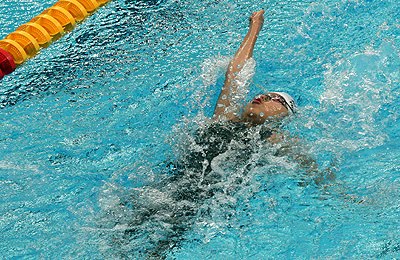
They were competing in swimming styles such as Backstroke, Butterfly and Free-Style.

Thanks to Voxsports. Here's a clear video on it.

The event, an annual highlight in the disabled sports calendar, is for swimmers aged 7 years and above. The participants will compete based on their physical or intellectual disabilities. Races are held in all four swimming strokes, ranging from 50m to 400m.

A total of 97 swimmers will be taking part in this year's championship. The youngest and oldest participant is nine years and 55 years old respectively.

This competition also serves as a platform to identify junior swimmers for the Singapore Sports School and potential athletes for the national squad, with promising swimmers to be selected and groomed for the ASEAN Para Games 2011 in Indonesia and the 2012 Paralympics in London.

I am so proud of them!!!!!

The event’s Guest-of-Honour is MG (NS) Chan Chun Sing, Acting Minister for Community Development, Youth and Sports and Minister of State for Information, Communications and the Arts.


Participants this year include notable swimmers such as Paralympians

Theresa Goh

Born with spina bifida, Theresa Goh started swimming at the age of five. She is one of Singapore's top athletes and was awarded Sportsgirl of the Year for two years in a row in 2002 and 2003, Sportswoman of the Year by the Singapore Disability Sports Council in 2004, and the Singapore Youth Award in 2005.

Results:(1) Theresa Goh
~ 100m freestyle (classification: s5) gold medal with a timing of 1:40.96
~ 200m freestyle, gold medal with a timing of 3:52.99
~ 100m breaststroke, gold medal with a timing of 2:20.02


Yip Pin Xiu

Results:
(2) Yip Pin Xiu
~ 50m freestyle (classification: s3) gold medal with a timing of 1:03.70
~ 100m freestyle, gold medal with a timing of 2:17.76
~ 200m freestyle, gold medal with a timing of 4:47.61

-
Born with muscle dystrophy, a disease which causes her muscles to degenerate slowly.
- She is a Secondary 4 student at Bendemeer Secondary School.
- Swims backstroke in the 50m freestyle (S3) event. Most competitors use the front-crawl.
- Despite her fist-like hands and weak wrists, she compensates with super-fast strokes. While able-bodied backstrokers swim with their nose and mouth above water most of the time, her head is tilted back and submerged, so that her hips can rise higher, reducing the drag created by her limp legs.
- To start the backstroke race, she is dangled by her arms, which are held by her coach, Ang Peng Siong. To turn, she swivels 180 degrees on her back.


Khristine Quek, who was the first disabled swimmer to be admitted into the Singapore Sports School in 2007


And first time contestants Adam Kamis, age 30, and Vellasamy s/o Subramaniam, age 27, competed in the 50metre and 100metre Breaststroke events.

Adam Kamis is one of SDSC’s elite track & field athletes who have taken to competitive swimming as part of his rehabilitation. He completed a full sundown marathon!

Results:
(3) Adam Kamis
~ 50m breaststroke (classification: s6) gold medal with a timing of 1:04.82
~ 100m breaststroke, gold medal with a timing of 2:35.16

Results:
(4) Vellasamy s/o Subramaniam
~ 50m breaststroke (classidication: s10) gold medal with a timing of 1:17.82

And Singapore Sports School student Emma Dione Schick finished with three gold medals too. Her ultimate goal is to qualify for the London 2012 Paralympics.

Results:
(5) Emma Schick
~ 50m freestyle (classification: s9) gold medal with a timing of 40.89
~ 100m freestyle, gold medal with a timing of 1:36.76
~ 100m breaststroke gold medal with a timing of 2:19.76

Journey of Paralympics participation for Singapore

- 1988: Send a squad to participate in the Summer Paralympic Games (Seoul)
Despite winning no medals in the 1988 Summer Games, Singapore continued to send teams - 2008: Six athletes came home with four medals.
The 2008 Games was the first time Singapore has won a medal in any Paralympic competition.


Not just in swimming, but in many other sports.


There are Singapore sailors Jovin Tan and Desiree Lim


Laurentia Tan in the Equestrian event
.

She is an equestrian dressage rider for Team Singapore. She lives in England where she trains with her horse called Nothing To Lose, also nicknamed Harvey. She was diagnosed with cerebral palsy and profound deafness as a child.


Singapore Paralympic wheelchair racer Eric Ting – who is paralysed from the chest down - go through the paces in the gym late last week. He represented Singapore in wheelchair racing in the Beijing Games.
He was an ex-commando who became paraplegic after a car accident


Firdaus bin Nordin, our national wheelchair racer
I know I have missed out some! But anyways, congratulations in making it thus far. Keep going~ all of you are an encouragement to all of us.


2012 London Paralympics. Go for it Singapore!


And lastly congratulations also to the OSIM Triathlete who was mute and deaf and used this as an advantage to come in top placing in the Tri last Sunday. Thumbs UP!


Related Posts Plugin for WordPress, Blogger...